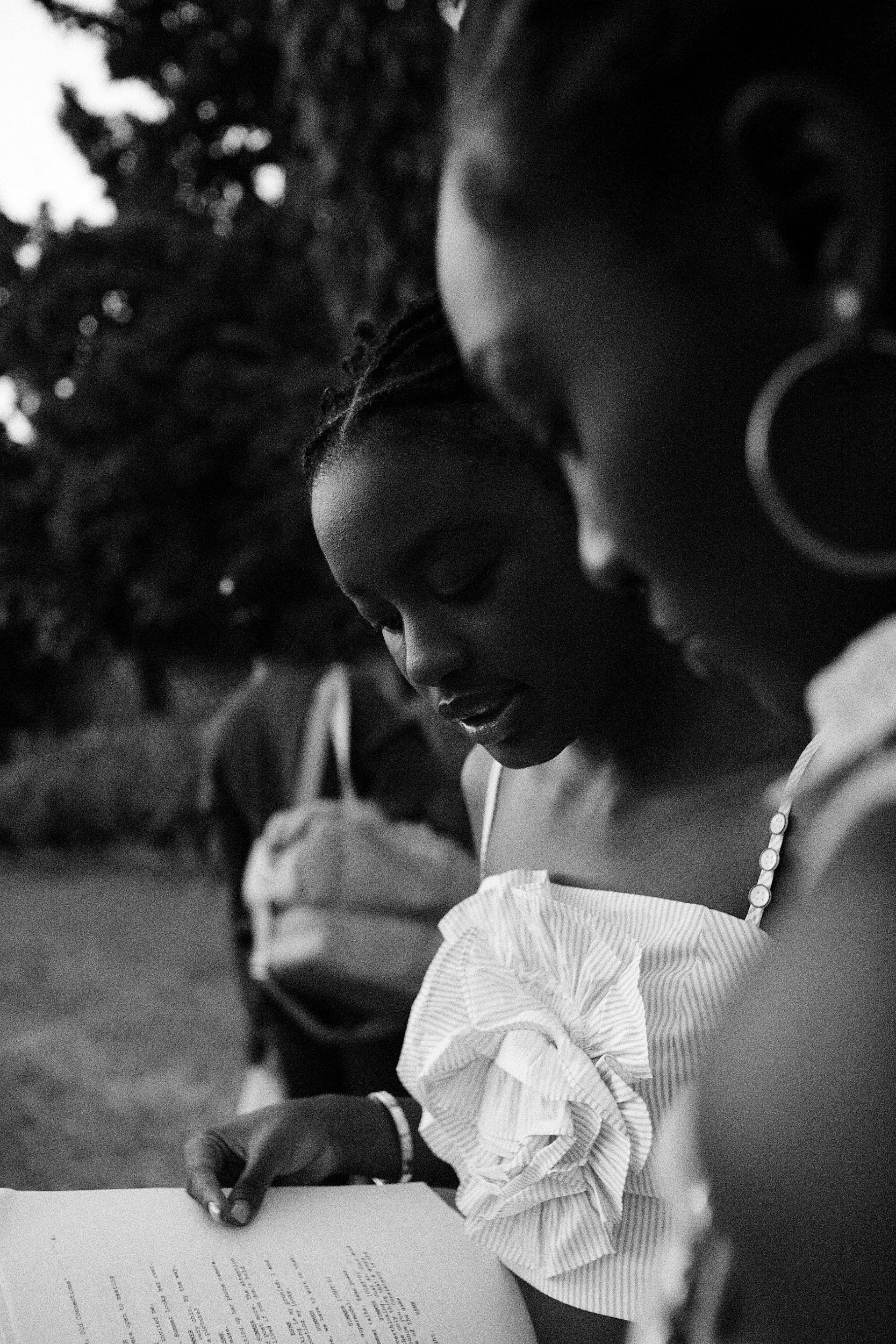
❋
Next Salon Stars: April 2026ABOUT
What is a Literary Salon?
Historically, literary salons have served as spaces where the elite and the not-so-elite met to exchange ideas, question norms, and converse on matters of art, literature, and life. While it is common to associate salons with European origins, they have existed in other parts of the world for far longer.
Records show gatherings of this kind in 750CE Muslim Abbasid society. Known as mujaalasaat, these gatherings brought together Arabs and non-Arabs, Muslims and non-Muslims, to share knowledge, debate, and for inspiration. They produced canonical works of literature, ancillary religious text, nurtured cultural exchange, and encouraged both intellectual and civic participation. They were often held in gardens, homes, and bookshops, spaces that blurred the boundaries between the private and public.
In Britain, the Bluestockings Society emerged during the 18th and 19th centuries, led by women such as Elizabeth Montagu, Elizabeth Vesey, and Mary Wollstonecraft, who hosted salons or conversazioni that brought writers, philosophers, and artists together to exchange ideas and elevate women’s intellectual standing. Though largely the domain of upper-class white women, these salons marked a quiet revolution, carving out space for women’s voices within male-dominated intellectual life.
In Europe, the salon (sala or salone) appeared in Italy in the 16th century, then the salon (salonnière) flourished in France during 17th and 18th centuries. Gatherings were frequently held in bedrooms or a private room for intimate friends. Literature about salons is dominated by idealistic notions of politeness, civility and honesty, reasoned debates and egalitarian polite conversation.
Across the Atlantic, First Lady Martha Washington held salon-style gatherings in the 1780s at the White House and her home estate, giving private citizens access to government and government officials, visitors, and other guests to mingle in a semi-informal setting.
Later, Black-women-led literary salons such as A’Lelia Walker’s The Dark Tower became sparks for the Harlem Renaissance in the United States. Walker’s home, from 1912 through the 1920s, served as a safe space for conversation among the most influential African American creatives of the day. Poet Langston Hughes described the salon as “filled with guests whose names would turn any Nordic social climber green with envy.” It was a place where jazz musicians mixed with dancers, and foreign aristocrats with financiers and members of New York’s Black intelligentsia, spaces alive with music, intellect, and imagination.
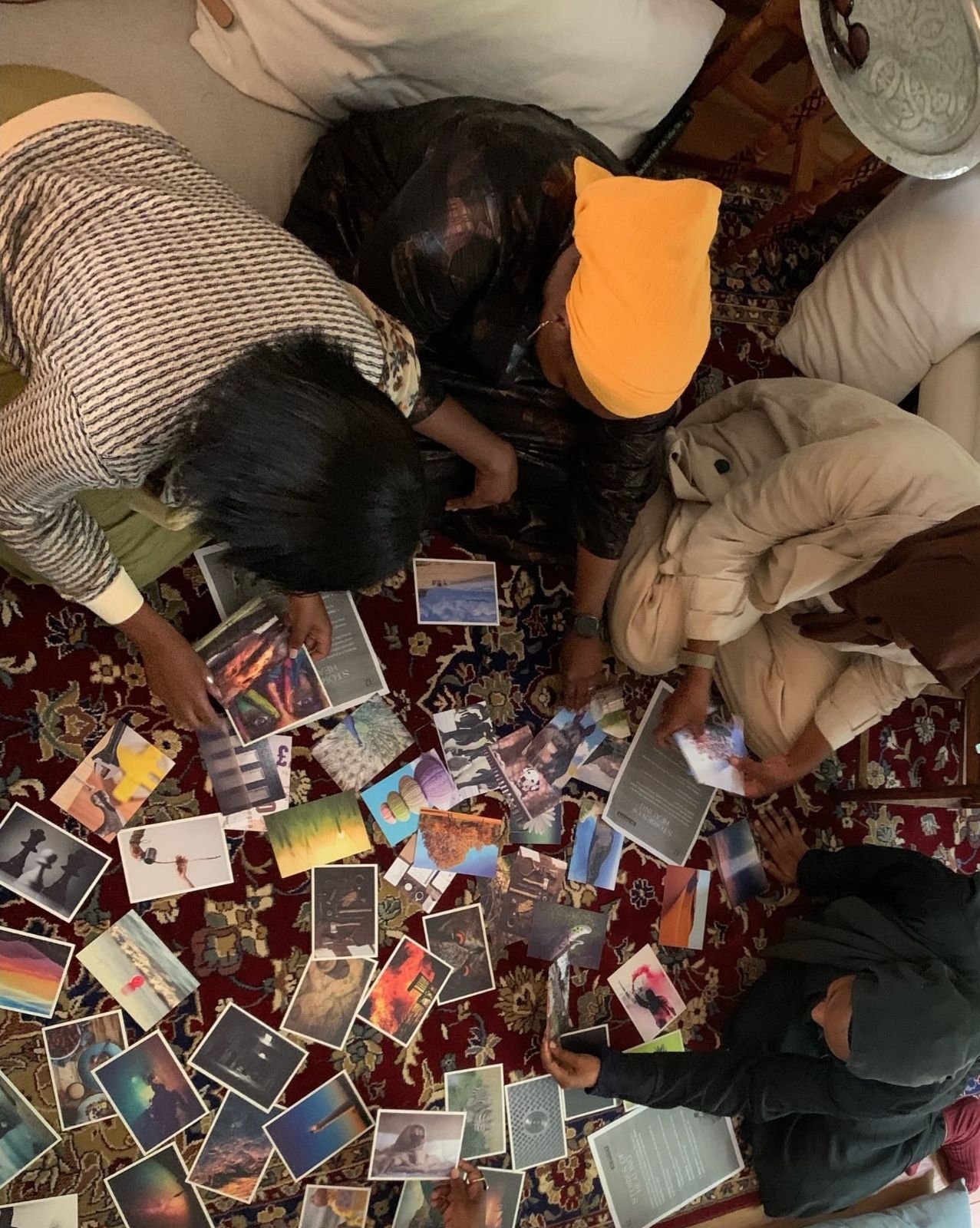
Our Story
The Literary Salon for Black Muslim Women builds on a genealogy of varied global traditions of gatherings, spaces that have, across centuries and continents, intertwined thought, creativity, and connection.
This salon inherits that tradition of intellectual intimacy and creative exchange, but brings to its centre the voices and imaginations of Black Muslim women—voices too often erased, unheard, or fragmented across the worlds of literature, faith, and cultural life.
This salon exists because our stories matter. It is a gathering devoted to reading and reflecting on works written by Black women, writers who world-build and those that share the lived experiences of Black women across the world.
Our gatherings are about engendering depth. We are deeper than a book club. We are not here just to finish books. We read to let ourselves and the words breathe. In these pages and conversations, reading becomes more than an act of consumption. It is a practice of witnessing and remembrance. Together, we slow down, listen, and make meaning across our similarities and differences. Here, literature is not an escape but a return. A return to our Creator, to self, to lineage, and to one another.
The salon invites Black Muslim women to honour their own voices, to converse, think and feel deeply, and to reclaim literature as a practice of liberation – an act of both remembering and becoming.
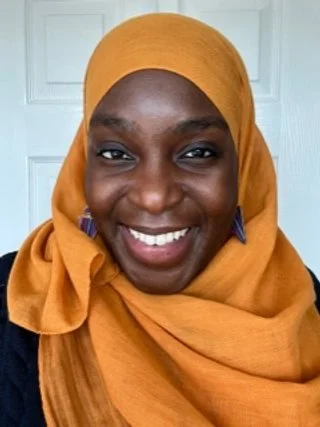
Meet the Founder
Dr. Zainab Kabba is a researcher, writer, and learning designer whose work explores how knowledge is formed, shared, held, and lived in communities and institutions. She is the founder of Quotidian Strategies, where she partners with organisations and communities to design reflective learning spaces, translate research into practice, and cultivate ethical, values-led approaches to education and leadership.
The Black Muslim Women’s Literary Salon emerged from her longstanding commitment to creating spaces for meaning-making, witnessing, and transformation. Her academic work and her current writing continues to examine formation, power, and practice beyond extractive or commodified models of learning. Across her work, Zainab is interested in cultivating conditions where people can think together carefully, attend deeply, and be changed—by texts, by one another, and by what emerges between them.